Independent engineering · Expert testimony
Medical device failure analysis.
Alpha Devices investigates how medical devices perform and why they fail. We test the hardware, analyze the software and data, review the design record, and explain the findings in reports and expert testimony.

Litigation experience
Independent analysis in major litigation.
Our role is to establish the engineering facts and explain them clearly. That work has supported counsel in some of the largest medical device matters in recent years.

Philips Respironics litigation
Alpha Devices performed device analysis and provided expert-witness support in the Philips Respironics litigation, which reached a $1.1 billion U.S. personal-injury and medical-monitoring settlement.
The recall covered 15 million devices worldwide. In FDA’s words, the sound-abatement foam “can break down,” and “black pieces of foam, or certain chemicals that are not visible, could be breathed in.”
Other litigation supported
Combined verdicts and settlements across other matters supported by Alpha Devices.
Capabilities
Six ways to answer the technical question.
We examine how a device was designed, how it performed, and what may have gone wrong. Testing, software analysis, documentation review, and FDA research each contribute to the answer. Choose one to see what the work involves and what you receive.
01Engineering investigation
Failure analysis & reconstruction
We inspect the device and its components, reconstruct the relevant operating conditions, and test each proposed cause of failure. The investigation also evaluates evidence that the device operated normally.
A documented assessment of the failure mechanisms, the alternative explanations, and the limits of the available evidence.
- Mechanical, electrical, thermal, and fluid-system analysis
- Device condition, accessories, and maintenance history
- Incident reconstruction and comparative evaluation
- Assessment of both malfunction and normal operation
02Engineering investigation
Custom testing & measurement
We build test fixtures, instrument sample devices, and recreate the operating conditions that matter. The measurements show whether a proposed failure mechanism is consistent with how the device actually performs.
A focused test program with recorded methods, measurements, results, and limitations.
- Custom fixtures and instrumented test environments
- Sample-device and comparative testing
- Pressure, flow, temperature, and particle measurements
- Repeatable experiments built around the technical question
03Engineering investigation
Software, firmware & device data
We analyze code, firmware, settings, and recorded signals alongside the physical evidence. That lets us reconstruct the sequence of events and explain how the device’s sensors, alarms, and controls responded.
A documented account of system behavior and event timing, with missing or conflicting information identified.
- Code and firmware evaluation
- Event logs, waveforms, and time alignment
- Alarm, sensor, and control-logic analysis
- Correlation of recorded events with bench testing

04Documentation review
Design & quality documentation
The technical record shows how a device was designed, which risks were recognized, and how the safeguards were tested. We trace those decisions through the design and quality documentation, identify gaps, and evaluate whether the evidence supports the conclusions in the file.
An assessment of design decisions and risk controls against test results and field experience, with supporting records and open questions identified.
- Verification and validation protocols, results, and deviations
- Complaint investigations and corrective and preventive action (CAPA)
- Warnings, instructions, design changes, and foreseeable use
- Analysis against the standards and requirements that applied at the time

05FDA data research
MAUDE & FDA database analysis
We analyze MAUDE and the other openFDA datasets to find related reports and trace a device’s regulatory history. Records are matched by product name, manufacturer, model, and device identifier so the incident can be seen in context.
A history of relevant reports and regulatory events, supported by source records, search criteria, and a clear statement of the data’s limitations.
- Targeted searches by device, manufacturer, product code, and event type
- Review of event narratives, report patterns, and relevant dates
- Cross-checking related records and identifying potential duplicates
- Comparison with device testing, complaints, and design records
06Expert support
Expert reports & testimony
We develop independent technical opinions and evaluate opposing explanations. Our reports and testimony set out the findings, the methods behind them, and the evidence supporting each conclusion.
Clear expert reports, technical demonstratives, and testimony grounded in the investigation.
- Early case assessment and evidence priorities
- Independent opinions and technical responses
- Discovery and deposition preparation
- Expert testimony and demonstrative development

openFDA research · FDA Search
Search FDA adverse-event data in one place.
FDA Search is our research tool for the FDA’s public databases: device reports (MAUDE), drug reactions (FAERS), food and supplement events (CAERS), and tobacco problem reports. One search bar, live openFDA data, filters that work on the loaded results, charts, problem maps, linked recalls, and reports you can save, annotate, and export.
- Four live datasetsMAUDE · FAERS · CAERS · Tobacco, straight from api.fda.gov.
- Intersection queriesSeveral terms, include and exclude pills, field auto-detection.
- Analysis built inCounts over time, top problems, device-to-patient problem maps, recall cross-links.
- Your workspaceFolders, notes, highlights, and exports to Excel, Word, PDF, and JSON.
Who we work with
Counsel, manufacturers, health systems, and medical examiners.
Each brings a different question. Each needs the same thing: a clear, independent account of what the evidence shows.
I am with
Legal counsel
Understand the engineering behind the case.
We help plaintiff and defense counsel evaluate claims involving medical devices. Our work identifies the evidence that matters, tests the proposed causes of failure, and develops independent technical opinions.
Independent analysis from early case assessment through reports, deposition, and trial.
- Identify inspection priorities, key design records, and evidence gaps
- Reconstruct device behavior and evaluate causation theories
- Connect MAUDE reports and recall history with the incident evidence

Manufacturers
Find the cause of a device complaint.
Device complaints can stem from design choices, software behavior, operating conditions, or a combination of factors. We review the records and test the equipment to evaluate possible causes and evaluate possible corrective actions.
Focused testing and documented findings for engineering, quality, risk, and legal teams.
- Investigate performance complaints and disputed failures
- Review QMS records, the DHF, risk files, and requirements traceability
- Evaluate complaint and recall patterns alongside test evidence
Hospitals & health systems
Establish the device’s role in an incident.
We help clinical engineering, risk management, and counsel understand what happened during a device-related incident. The review covers the equipment, settings, accessories, maintenance records, and recorded events.
An independent technical assessment to inform incident review, equipment decisions, and the response to a claim.
- Inspect equipment and review configuration and maintenance records
- Connect device logs, alarms, and operating conditions
- Identify evidence gaps and recommend further testing

Coroners & medical examiners
Determine what the device did.
We help coroner’s and medical examiner’s offices understand the role a medical device may have played in a death. The examination covers the device, its settings and recorded data, and the records that came with it.
An independent engineering account of the device’s condition and recorded behavior, to inform the death investigation.
- Examine and document the device and its accessories
- Extract and interpret device logs, alarms, and settings
- Identify what the device evidence can and cannot establish
Device experience
From cardiac support to care at home.
Across device categories, we examine how components, software, and safeguards work together, and how those interactions affect performance. Choose a category to see the devices and what we look at.
Explore Device Experience01Device experience
Cardiac & circulatory support
Heart-lung systems, perfusion pumps, and extracorporeal circuits.
Flow delivery, pressure, temperature, control behavior, and the interaction between pumps, sensors, and circuits.
02Device experience
Respiratory & sleep therapy
Ventilators, CPAP and BiPAP systems, and breathing circuits.
Pressure and flow, triggering, therapy delivery, alarm response, and materials in the breathing-gas pathway.

03Device experience
Surgical & procedural equipment
Powered surgical tools, energy-delivery systems, and operating-room equipment.
Mechanical performance, power and thermal behavior, accessories, protective functions, and use conditions.
04Device experience
Home care & portable devices
Home respiratory therapy, portable treatment, and patient-support equipment.
Settings, power interruptions, alarms, maintenance, and operation outside a controlled clinical environment.

05Device experience
Transplant & organ preservation
Organ transport, preservation, and perfusion systems.
How pressure, flow, temperature, and monitoring interact to maintain the intended operating conditions.
06Device experience
Infusion & fluid delivery
Infusion systems, syringe pumps, and fluid-management equipment.
Delivery accuracy, occlusion response, air detection, flow control, and the relationship between alarms and physical performance.
07Device experience
Warming & temperature management
Forced-air warming, heater-cooler systems, and circulating-fluid devices.
Heat transfer, airflow, particle transport, temperature regulation, and protective controls.
08Device experience
Patient support & monitoring
Hospital beds, positioning equipment, sensors, and alarm systems.
Mechanical movement, sensor behavior, alarm timing, operating configuration, and interactions with connected equipment.
Standards
Measured against the standards that applied.
We compare each device with the design requirements, safety standards, and FDA records in force at the time of the incident.
- IEC 60601-1Basic safety and essential performance of medical electrical equipment
- ISO 14971Risk management: hazards, controls, and residual risk
- IEC 62366-1Usability engineering: use errors and the user interface
- IEC 62304Software life cycle: requirements, verification, and anomalies
- IEC 60601-1-8Alarm systems: priority, signals, delays, and logs
- ISO 13485 · 21 CFR 820Quality management, design controls, and complaint handling
How we work
A focused question and a rigorous investigation.
Every engagement starts with the technical question that needs answering and ends with findings that counsel and technical teams can rely on.

- 01
Define the question
Clarify the technical question, review the available evidence, and agree on priorities and deadlines.
- 02
Follow the evidence
Inspect the device, review the records, and design tests that can distinguish between competing explanations.
- 03
Explain the findings
Present the methods, results, and limitations in a clear report for counsel and technical teams.
- 04
Support what comes next
Answer follow-up questions, evaluate opposing opinions, and present the findings in deposition and at trial.
Resources
Guides from the engineering side.
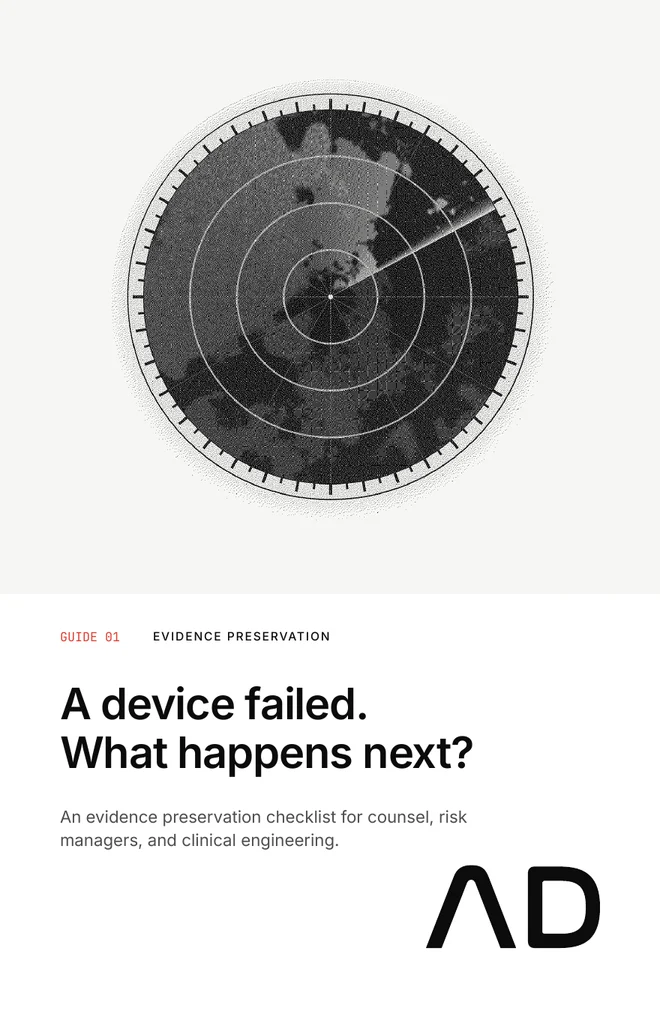
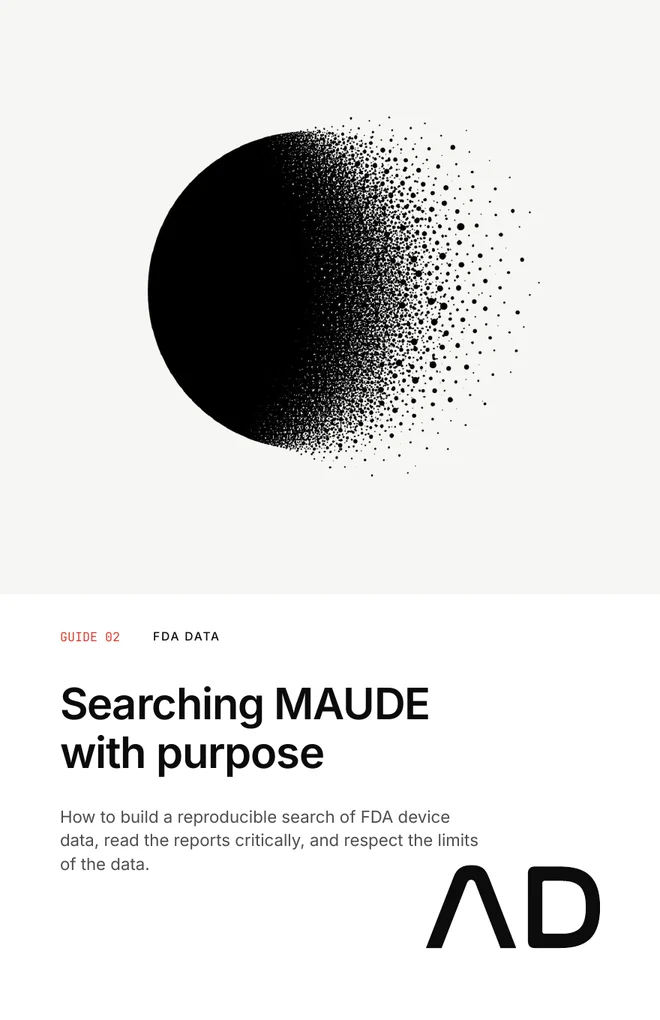
Short, practical guides to medical device evidence, alongside an overview of our services and testing capabilities.
Get in touch
Tell us about the device.
Share a brief overview of the device, the question you need answered, and any deadlines. We’ll explain how we can help and recommend the next steps.
info@alphadevices.io